The Core Mechanism: Photoluminescence Is Driven by Light, Not ElectricityPhotoluminescence (PL) operates through light absorption alone—no electricity required. When photons strike a material, they excite electrons from their ground state to higher e...
VIEW MORE
What Is Reflective Practice—and Why It Matters for B2B ProfessionalsReflective practice is the intentional, systematic process of analyzing one’s own experiences, decisions, and actions to derive lessons and improve future performance. In a B2B conte...
VIEW MORE
Understanding Photoluminescence Lifetime RangesPhotoluminescence—the emission of light from a material after absorbing photons—varies dramatically in duration. This variation is governed primarily by the nature of electronic transitions and the mater...
VIEW MORE
What Makes Reflective Products Truly Cost-Effective?Engineer Grade vs. High Intensity vs. Diamond Grade: Balancing Retroreflectivity and LifespanChoosing the right reflective material starts with understanding how grade, retroreflectivity, and lifesp...
VIEW MORE
What Makes Reflective Roll Truly Durable? Key Material & Performance Metrics Tear Strength, Puncture Strength, & UV Resistance Three performance metrics define True reflective roll durability. UV resistance slows photodegradation and extends the ou...
VIEW MORE
Why Retroreflective Materials Make Things Brighter How retroreflective materials are different from reflective materials Retroreflective materials reflect light that is directed at it right back to the source. Reflective materials reflect light in ...
VIEW MORE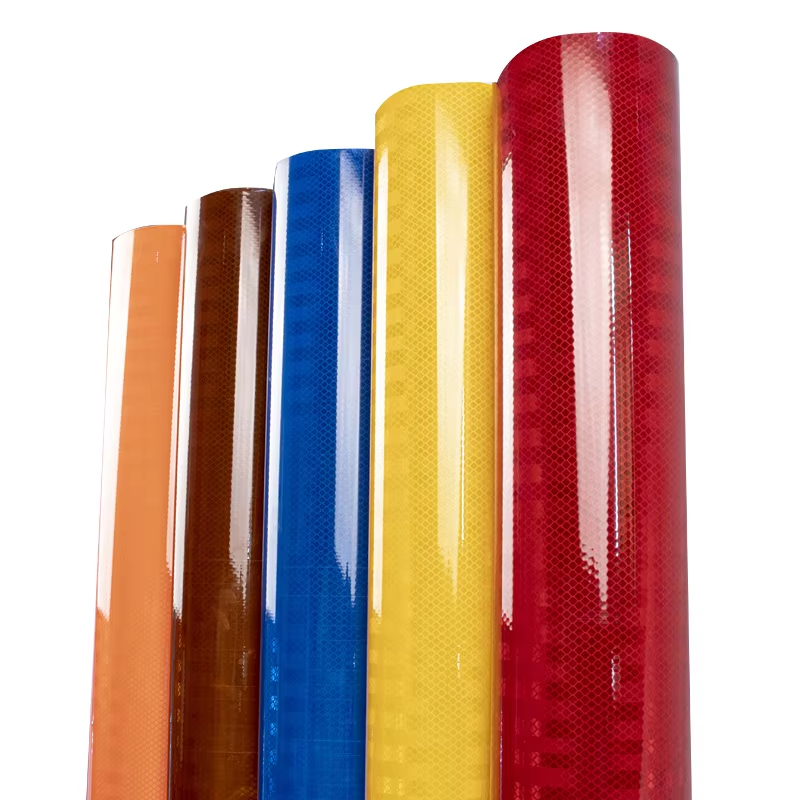
UV Resistance and Photostability of Reflective Roll Degradation Pathways in the Reflective Polymer Matrix Under UV Exposure Three separate mechanisms of chain scission, photo-oxidation, and cross-linking in reflective roll materials caused by UV ra...
VIEW MORE
ASTM D4956 Servers Sheet Performance Tiers Type I to Type IX: Reflective Material Type to Fit Application ASTM D4956 distinguishes reflective sheetings in nine tiers to describe their different levels of visibility, durability, and performance in v...
VIEW MORE
Photoluminescence Technology for Emergency Egress For Photoluminescence technology to work, it goes through three photophysical processes. They are light absorption, energy storage, and afterglow light emissions. Photoluminescence technology use en...
VIEW MORE
Advances in Retroreflective Technology to Improve Road Safety Retroreflective technology increases the visibility range of drivers in low-light situations. Retroreflective technology enhances, and protects, the driver’s ability to see importa...
VIEW MORE
Fujian Sanhao Technology provides high-performance reflective sheeting for road traffic signs and vehicle conspicuity. ISO 9001, ECE 104R, EN ISO 20471 certified. 25+ years R&D expertise. Request a quote today.
Qiaosheng road,26th, Nanxiamei Town,Chendai,Jinjiang,Quanzhou,Fujian,China
Copyright © 2026 by Fujian Sanhao Technology Co., Ltd. Privacy Policy
 EN
EN