
 EN
EN
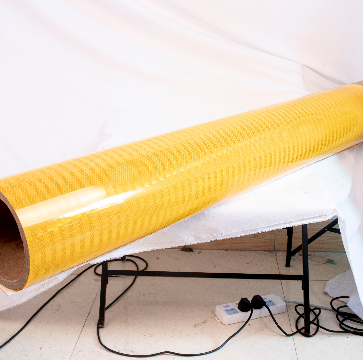
What Makes Reflective Roll Truly Durable? Key Material & Performance Metrics
Tear Strength, Puncture Strength, & UV Resistance
Three performance metrics define True reflective roll durability. UV resistance slows photodegradation and extends the outdoor service life to 5 to 7 years. A tear strength of ≥ 15 N/mm² and a puncture strength of > 200 N protect the substrate from penetrations and fastener punctures. ASTM protective roll testing revealed that rolls failing any of these metrics account for 70% of premature field replacements. For climate-resilient performance, choose rolls that are certified to ASTM E2599 and FM 4882, as these certifications are typically recognized by building inspectors and energy auditors.
Material Comparison: Bubble-Foil Versus Aluminum-Foil/Reinforced PE for Long-Term Performance in High-Stress Laminates
Aluminum-foil/reinforced polyethylene (PE) composite rolls are your best choice for high-stress, code-driven applications because of their vapor control, 97% thermal reflectivity, and UV resistance for over 10 years. They also have a higher tear strength of 18–22 N/mm², which allows for more demanding projects like cold storage retrofits. Bubble-foil laminates also offer 90% thermal reflectivity and are sufficient for low-impact applications and projects requiring an interior/first-layer membrane. After 5–7 years, these lower priced options fail in the UV. When long-term energy code compliance is required, prioritize Aluminium/PE; for low-impact/low-circumstances applications, cost-focused Bubble-foil will suffice.
Bulk Procurement Essentials: MOQs, Pricing Tiers, and Logistics for Reflective Roll
MOQ, Palletization, and Freight Class for Delivery Planning
For a supplier to retain a good level of production and quality control, they require a MOQ of 50 rolls. Improper palletization can result in the handling of roll sheets incurring up to 20% more cost. Reflective roll is classified as NMFC Class 100. Class 100 generally incurs a freight cost of $2.25 per mile. In contrast, a Class 150 roll incurs a freight cost of $3.80 per mile. To avoid unnecessary freight class cost concerns, early freight class alignment is a best practice.
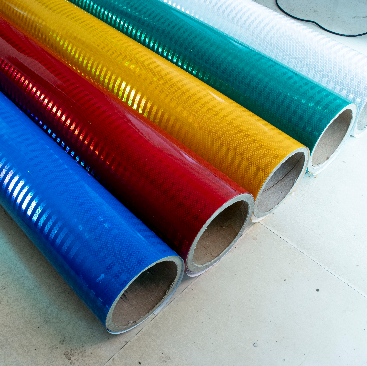
Palletization: Tiered Pricing for 50+ and 100+
Effective tier pricing models do not compromise profit at these thresholds. Generally, a price 8% - 12% below the base price is earned at the 50 roll threshold; at the 100 rolls threshold, a price discount of 15% - 20% is common.
For the 50 roll threshold, the cost per roll is $42 as opposed to a base cost of $46. The cost per roll at the 100 roll threshold is $38.
Consider these cost savings when evaluating the return on investment (ROI) for warehousing and multi-unit housing project expansions. Discounts should be evaluated to account for freight cost changes at the 50 roll threshold, as some suppliers provide free shipping at the 100 roll threshold. Each saving threshold is evaluated at each discount and cost capped at the material cost.
Trusted Supplier Pathways: OEMs, Wholesalers, and Contractor-Focused Distributors
Three supplier pathways exist when procuring reflective roll by the truckload. OEMs have complete and consistent traceability, which is best for large, specification, driven projects like cold storage. Wholesalers offer a competitive price ranging from 50+ to 100+ rolls, but you must verify their ISO 9001 Certification and real-time inventory transparency. Contractor-focused distributors are job-site ready and palletize to NMFC Class 100. They pre-stage HVAC envelope work materials and mitigate typical lead times by 30%. Each supplier pathway has a specific due diligence process: for OEMs, production audits; for wholesalers, inventory transparency; for distributors, proof of no accessorial delays from on-time, damage free delivery.
High-Demand Commercial Applications Driving Reflective Roll Bulk Orders
Cold Storage Retrofits, HVAC Envelope Upgrades and Energy Code Compliance Projects.
Three commercial applications most often deal with high, predictable demand for reflective roll. Cold storage retrofits need rolls of over 95% reflective materials to mitigate a gain of radiant heat. ASHRAE field studies have shown this reduces the refrigeration load by 15-25%. Upgrading the HVAC envelope to a reflective roll set as both an air and radiant barrier provides a 30% time savings over ductwork and plenum engagement compared to using batt. As of the latest IECC 2024 changes to the energy codes, a reflective air barrier must be used in 19+ climate zones, which is resulting in bulk buys. Wholesalers have noted a 40% increase in weekly orders as contractors scramble to meet building deadlines in order to comply with the new regulations. The demand has made bulk buying a requirement for both compliance and cost mitigation.
FAQ
What impacts how durable the reflective rolls sold here are?
A roll is durable if it has UV resistance, a tear strength that satisfies ≥15 N/mm², and a puncture strength that is ≥200 N. A roll that fulfills these requirements will last for over 5 years.
What is the best material when selecting reflective rolls?
Reflective rolls with Aluminum-foil/reinforced polyethylene (PE) are optimal when needing to use them for a while and have high application of tensile strength, UV stability, and tear strength compared to bubble-foil laminate.
What is the MOQ?
The MOQ is typically 50 rolls and is set by an honest manufacturer to ensure production efficiency.
What bulk pricing discounts are typically offered?
Discounts usually include 50 rolls = 8–12%, and 100 rolls = 15–20%. Depending on the manufacturer, freight costs may also be discounted.
Where are reflective rolls used?
Reflective rolls are usually utilized in cold storage retrofits, HVAC envelope improvements, and projects that adhere to new energy codes, particularly in areas that are updating to IECC 2024 standards.