
 EN
EN
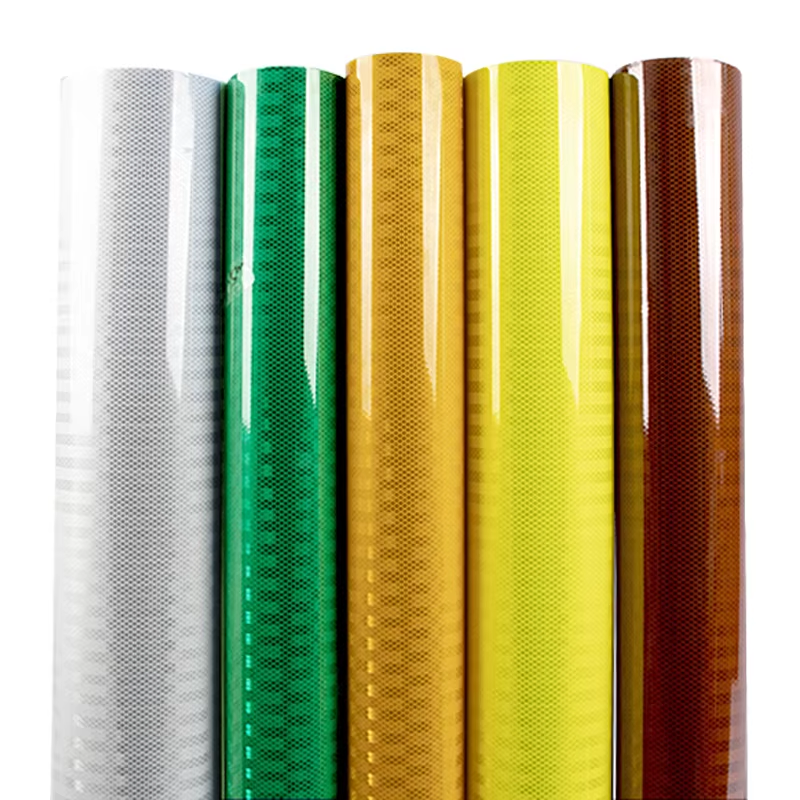
Why Retroreflective Materials Make Things Brighter
How retroreflective materials are different from reflective materials
Retroreflective materials reflect light that is directed at it right back to the source. Reflective materials reflect light in all directions. Because retroreflective materials reflect 80% of light back to its source, they are useful in products like work safety vests, road safety signs, and flashlights. Because reflective materials scatter the light that strikes them, they are relatively unhelpful for applications where safety is critical, like at the side of the road while waiting for emergency response. Retroreflection is the main requirement for safety design standards in visibility.
Popular retroreflective materials
Of the wide range of retroreflective materials, three different categories are the most popular and the most useful in applications of retroreflection.
Material Type Mechanism
Glass bead Uses spheres in materials that bend light to do retroreflection
Microprismatic Uses small prisms to do retroreflection
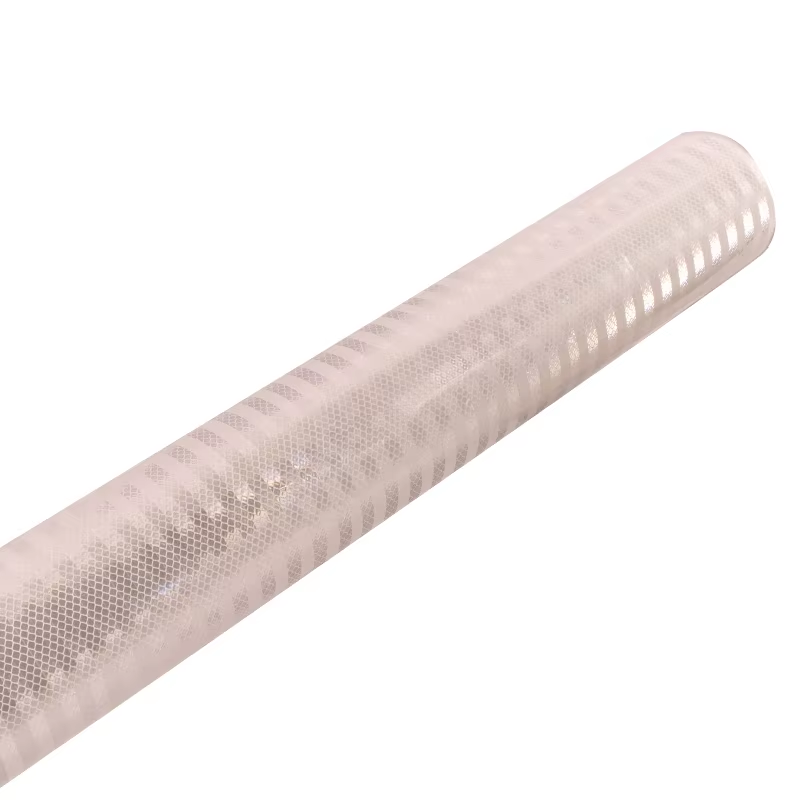
Pigment-embedded films Uses light to capture in clear pigments to do retroreflection
Glass bead materials retroreflective systems use small spheres that bend light to it and then out to do retroreflection. Microprismatic materials use small cube prisms for a retromaterial systems. Pigment-embedded materials use pigments that are more reflective of light to do retroreflective systems in materials that are more substrates. Pigment-embedded materials use reflective prisms that are more integrated into pigment materials to do retroreflective systems.
Safety and Compliance Challenges
Reflective materials are essential systems for the visibility of personnel and infrastructure. Relatively small retroreflective patches sewn onto workers’ high-visibility safety apparel (HVSA) reduces the vehicle-side collision risk of roadside workers first by as much as 45%. Laws exist to ensure the reflectivity of various safety apparel. Regulations define the minimum required retroreflectivity of roadside safety apparel to be specified along with the Markings and the Traffic Control Devices (MUTCD) and ISO/ANSI standards. Additionally, industrial-grade retroreflective exhibits greater than 85% reflectivity preservation even after 50 washing cycles, allowing compliance to be met in high demanding field conditions.
Applications for Indoor Reflection Technology: Improving Wayfinding, Safety, and Accessibility
Emergency egress pathways, stair treads, exit signs, and low-light interior wayfinding systems
In emergencies like power outages, smoke, or low-light conditions, reflective materials serve a vital role in safety indoors. In addition to the ease-of-use of retroreflective strips in emergency egress pathways, the speed of evacuation increases up to 30% when guidance is maintained. In low-light conditions, stair treads with retroreflective components integrated into them help reduce falls by as much as 60% as microprismatic exit signs remain visible through even the densest smoke and meet both NFPA 101 and ADA standards. In larger and more complex buildings such as hospitals and transit hubs, reflective markers placed in strategic locations help to facilitate frustration-free navigation. To accomplish the safety of reflective materials, the markers and signs should provide a consistent zone of reflective markers mounted around the eye level between 1.2 to 1.5m.
Toward the Performance of Indoor vs Outdoor Reflection: Illuminance, Angles of View, and Realistic Reflection
Reflective performance diverges between indoors and outdoors mainly due to lighting and spatial geometries. Indoors, the lighting level of some type of ambient light is low ranging between 5 and 50 lux levels. Therefore, for reflective emergency lighting materials, a highly retroreflective material should be used to reflect off of materials when illuminated by emergency lighting or when the room is at or near total darkness. In outdoor reflections, the illuminance can vary from 10,000 lux on a cloudy day to more than 100,000 lux when illuminated by direct sunlight, which can require higher levels of luminance to help overcome the lighting. Indoor difficulties viewing the reflections is inverted outdoors, requiring a higher level of luminance to overcome the ambient lighting. Indoor difficulties viewing the reflections is inverted outdoors, requiring a higher level of luminance to overcome the ambient lighting. The use of reflective exit signs in low light conditions inversely outdoors may require up to 100 times greater luminance than the ambient lighting. In addition to materials, viewing angle requirements differ greatly. Large stair treads and mounted wayfinding markers in close proximity will benefit from a wide reflective angle in greater dispersion, while road signs benefit from a relatively narrow forward-facing angle in which a reflective zone is optimized for use over a greater distance.
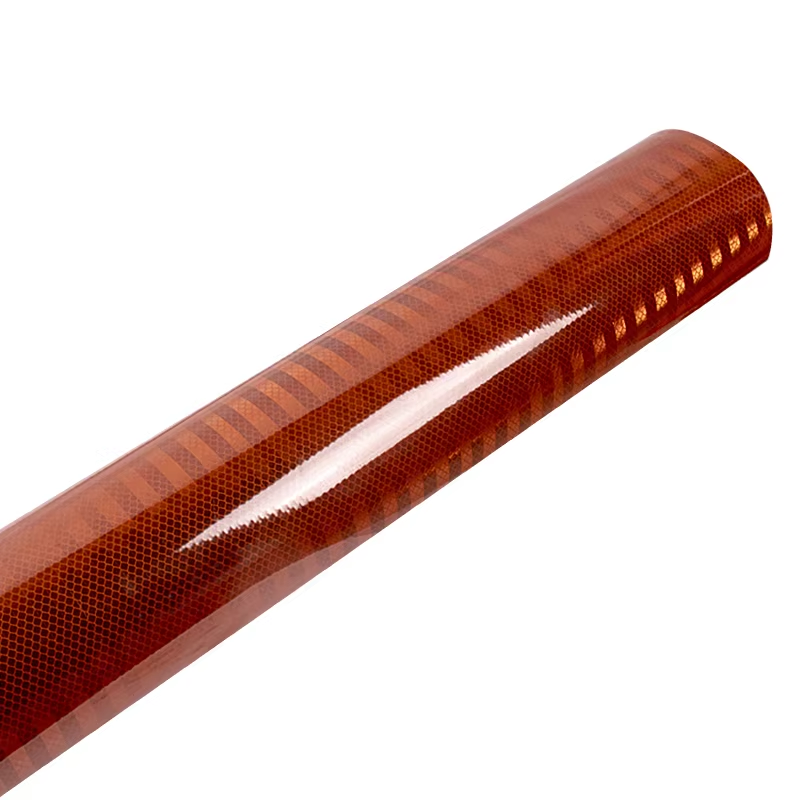
Material durability makes it easier to understand these domains:
Factor Indoor Requirements Outdoor Requirements
Illuminance Range 5-50 Lux 10,000-100,000 Lux
Optimal Viewing Angle 60°-80° Wide Dispersion 30°-45° Directional Focus
Environmental Resistance Minimal Protection from UV/Weather UV Resistance, Waterproof
Although lab testing shows retroreflectors as efficient as 85% in terms of light return, the real world outdoors retroflectors lose up to 40% of their effective performance over multiple years due to weathering, soiling, and the normal aging of the troflector lens. Indoors, retroreflectors are not stressed by the outdoors, but the individual geometry and the accessibility to the retroreflectors by the user must be carefully considered. Therefore, this trade requires balancing the three criteria of the optical performance, the angular response, and the degree of environmental tolerance of the materials used.
FAQ
What is retroreflection?
This is the ability to return the light that has been. It is mostly through engineered glass beads, microprismatic films or structures and serves to be seen in the dark.
What differentiates retroreflection from the norm.
While the norm scatters the light, this targets the origin of the light, therefore offering more visibility.
What are the major types of reflective materials?
Glass beads, microprismatic films, and those that have pigments embedded such as data reflective materials.
There are so many holdings that use reflective materials: safety apparel, signs, vehicles, exits, pathways, and systems.
How do reflective materials respond to outdoor conditions?
Outdoor reflective materials come into contact with UV radiation, weathering, and abrasion, all of which lead to performance degradation. There are UV stabilized materials, and manufacturers apply protective coatings to make materials last longer.
What are the considerations of how reflective materials work indoors and how reflective materials work outdoors?
Closely spaced reflective materials positioned in low light environments indoors involve greater retroreflective efficiency compared to those placed outdoors. Refreshing materials used externally is influenced by safety considerations, and outdoor materials are designed for brighter conditions.
What is the average lifespan of reflective materials?
Outdoor reflective microprismatic films with protective coatings against UV rays are shown to last 7-10 years, even when placed in extreme conditions. Examined microprismatic films with no protective coatings last as little as 3-5 years.