
 EN
EN
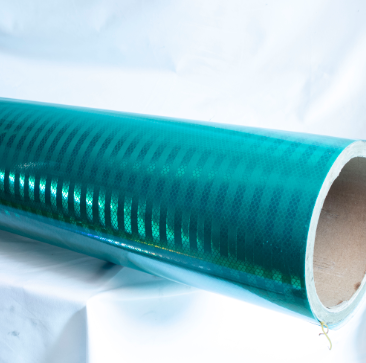
The Core Mechanism: Photoluminescence Is Driven by Light, Not Electricity
Photoluminescence (PL) operates through light absorption alone—no electricity required. When photons strike a material, they excite electrons from their ground state to higher energy levels. These unstable, excited electrons then return to equilibrium via radiative recombination, emitting visible light in the process. This full cycle—from photon absorption to photon emission—is powered exclusively by optical energy, distinguishing PL fundamentally from electrically driven luminescence.
Photon absorption, electronic excitation, and radiative recombination
In photoluminescence, incoming photons—whether ultraviolet, visible, or near-infrared—supply the energy needed to elevate electrons to higher quantum states. Once excited, electrons rapidly relax toward stability. As they transition back to lower energy levels, they release energy as photons—a process known as radiative recombination. The emitted light is the hallmark glow seen in safety signage, decorative pigments, and anti-counterfeiting inks. Critically, this occurs without any electrical circuit, current, or power supply; it is governed solely by optical excitation and quantum mechanical principles.
Energy conservation in photoluminescence: Stokes shift and bandgap alignment
Energy conservation shapes photoluminescent behavior through two key phenomena: the Stokes shift and bandgap alignment. The Stokes shift accounts for the energy loss between absorbed and emitted photons—typically as heat during non-radiative relaxation—resulting in longer-wavelength (lower-energy) emission than absorption. This explains why UV-excited materials emit visible light. Bandgap alignment refers to the precise energy separation between valence and conduction bands that enables efficient photon conversion. Materials like strontium aluminate and zinc sulfide are engineered with optimized bandgaps to maximize brightness and persistence, making them industry standards for high-performance photoluminescent applications.
Experimental Proof: Photoluminescence Functions Without Any Electrical Input
UV, laser, and solar excitation — real-world demonstrations of electricity-free operation
Photoluminescence activates reliably under diverse optical sources—no wiring, batteries, or current necessary. A handheld UV lamp instantly excites phosphorescent exit signs; a 405 nm blue laser triggers quantum dot emission without physical contact; even ambient sunlight energizes fluorescent safety vests and glow-in-the-dark pavement markers. These everyday examples confirm that PL is inherently contactless and electricity-independent—a property validated across laboratory and field settings.
Electrical isolation protocols: Faraday cages, insulating substrates, and zero-current validation
To rigorously exclude electrical influence, researchers isolate samples using Faraday cages—metal enclosures that shield against external electromagnetic fields—and mount them on insulating substrates like fused quartz or borosilicate glass. In-line ammeters consistently register zero current flow during illumination. Under these controlled, electrically isolated conditions, photoluminescence persists unambiguously. This experimental protocol, widely adopted in standards such as ASTM E2847 and ISO 17341, confirms that PL emission originates solely from photon absorption—not residual charge, capacitive coupling, or hidden current paths.
Photoluminescence vs. Electroluminescence: Key Differences in Excitation Source
Photoluminescence (PL) and electroluminescence (EL) both produce light—but their excitation mechanisms are fundamentally distinct. Photoluminescence is triggered exclusively by photon absorption: light energy excites electrons, which then emit photons upon returning to ground state. It requires no electrical input and functions entirely without contact. Electroluminescence, by contrast, depends on applied voltage or current to drive electron-hole recombination in semiconductors or phosphors—making it inseparable from electrical infrastructure. This core distinction defines their respective roles: PL supports passive, non-invasive inspection (e.g., detecting crystal defects or verifying ink authenticity), while EL reveals electrical integrity (e.g., identifying microcracks in operating solar cells or faulty display pixels).
| Feature | Photoluminescence (PL) | Electroluminescence (EL) |
|---|---|---|
| Excitation Source | Light (UV, laser, sunlight) | Electricity (current/voltage) |
| Electrical Input Required | No | Yes |
| Contact Needed | Non-contact | Requires electrical connections |
| Typical Use Case | Material purity checks, anti-counterfeiting tags | Circuit diagnostics, display technologies |
Why the Confusion Persists — and Why It Matters for Applications
Misattribution in education and industry materials
Misconceptions about photoluminescence often originate in oversimplified physics curricula that group all “glow” phenomena under broad categories like “luminescence,” without clarifying excitation pathways. Industry documentation compounds the issue—using vague terms such as “self-illuminating” or “active glow” for photoluminescent products, implying hidden power sources. As a result, engineers and procurement teams sometimes assume photoluminescent emergency signage requires backup batteries or wiring, leading to unnecessary complexity, cost, and compliance errors—despite international standards like ISO 16069 and EN 15312 explicitly recognizing PL as a fully passive, electricity-free solution.
Practical implications: Designing electricity-free optical sensors and anti-counterfeiting tags
Recognizing photoluminescence’s intrinsic passivity unlocks robust, low-maintenance applications where electrical infrastructure is unsafe, impractical, or unsustainable. Optical sensors based on PL materials monitor chemical reactions in explosive atmospheres without spark risk—aligning with IEC 60079–11 intrinsic safety requirements. Security tags embedded with photoluminescent nanocomposites authenticate pharmaceuticals or banknotes under UV light, eliminating batteries, RFID chips, or conductive traces. This clarity directly enables:
- Maintenance-free emergency signage in off-grid or disaster-prone regions
- Intrinsically safe gas-leak detectors and structural health monitors in mining and oil & gas
- Sustainable, recyclable packaging with tamper-evident, electricity-free verification
Understanding that photoluminescence needs only light—not wires, current, or voltage—empowers designers to build safer, simpler, and more resilient optical systems across safety-critical and high-security domains.
FAQ
What is photoluminescence?
Photoluminescence (PL) is a phenomenon where materials absorb photons (light) to excite electrons to higher energy levels. These electrons return to their ground state and emit photons (visible light) in the process, all without any electrical input.
How is photoluminescence different from electroluminescence?
While photoluminescence requires only optical energy (light) for excitation, electroluminescence depends on electrical input—such as current or voltage—to produce light.
What are some practical applications of photoluminescent materials?
Applications of photoluminescent materials include safety signage for off-grid areas, anti-counterfeiting tags in pharmaceuticals or banknotes, gas-leak detectors in explosive environments, and recyclable packaging.
What ensures photoluminescence does not involve electricity?
Experimental setups with Faraday cages, insulating substrates, and zero-current validation confirm that photoluminescence functions solely through optical excitation, not electricity.