
 EN
EN
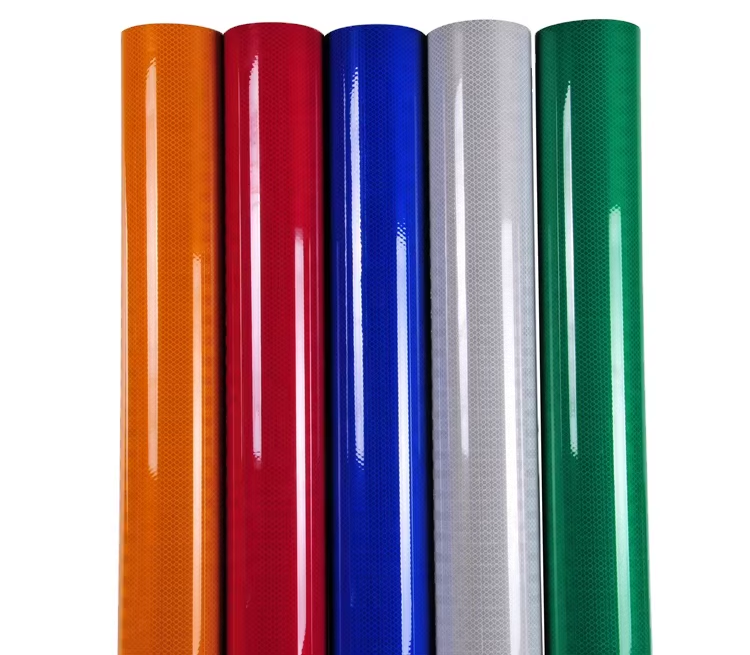
Preserving Retroreflective Performance Through Correct Reflective Roll Storage
A reflective roll sitting in a warehouse corner represents invested capital — and its value erodes with every degree of temperature fluctuation and every percentage point of humidity beyond tolerance. Sign fabricators who treat storage as an afterthought routinely discard material that could have performed for years under proper conditions.
The Degradation Mechanics Inside Improperly Stored Rolls
Temperature and Humidity: The Two Primary Causes of Premature Aging
A reflective roll is more sensitive to storage conditions than most sign shop materials. The PMMA acrylic surface layer begins softening at sustained temperatures above 40°C, causing the micro-prismatic elements to slowly deform under the weight of the roll. Glass bead sheeting fares slightly better in heat — the glass spheres resist deformation — but the binder resin holding them yellows and embrittles.
Humidity attacks from the edge inward. Paper-based release liners absorb moisture, swelling unevenly and creating wavy adhesive surfaces that prevent smooth application later. Polyethylene-coated liners resist moisture better, but the exposed adhesive at roll edges still collects airborne humidity that degrades tack. The practical guideline: maintain storage at 18°C to 25°C with relative humidity between 30% and 60%. Facilities without climate control in tropical regions — Southeast Asia, coastal Africa, northern Australia — lose 12–18 months of usable shelf life compared to climate-controlled storage.
Why Vertical Orientation Matters for Long-Term Storage
Horizontal storage — laying rolls flat on shelving — creates a pressure gradient through the roll layers. The bottom quarter of a flat-stored reflective roll bears the cumulative weight of every layer above it, compressing the prismatic structure and adhesive. After 6 months of horizontal storage, the bottom layers of a 45-meter roll show measurable retroreflectivity reduction at the contact zone.
Vertical storage in purpose-built roll racks distributes weight along the roll axis through the cardboard core. The reflective layers experience near-zero compressive force. Three-point contact racks support rolls at the base plus two points along the side to prevent sagging. Sign shops processing 3HAO reflective rolls report 20% less edge waste from vertically stored inventory versus horizontally stored material of the same age.
Practical Storage Protocols for Sign Fabrication Facilities
First-In, First-Out Inventory Management for Roll Stock
Every reflective roll carries a manufacturing date — either printed on the core label or coded into the batch number. A disciplined FIFO system routes the oldest inventory to production first, preventing material from aging past its usable window. Shelf life for HIP prismatic sheeting typically spans 2 years from the manufacturing date under proper storage; engineer-grade glass bead sheeting may extend to 3 years.
Color-coded month tags on roll ends provide visual inventory cues that require no database system. A sign shop processing 15–20 rolls monthly can manage FIFO rotation with wall-mounted inventory cards and a simple rack numbering system.
Inspection Protocol Before Moving Stored Rolls to Production
Before committing a stored roll to a customer job, three quick checks prevent downstream quality issues. First, unroll 30 cm and examine the edges under oblique lighting — waviness or delamination indicates moisture damage. Second, check the release liner peel force on a corner; tack that feels either gummy or dry signals adhesive degradation. Third, apply a test strip to scrap aluminum and verify that retroreflectivity matches expectations using a handheld retroreflectometer or by visual comparison against a known-good reference sample under controlled lighting.
A Distributor's Inventory Turnaround Success
A reflective material distributor in the Middle East serving 11 sign fabrication shops struggled with 22% annual material write-offs from heat-degraded inventory. Ambient warehouse temperatures reached 48°C during summer months, destroying PMMA-based reflective roll stock within 8 months of arrival.
The distributor installed a 60-square-meter insulated cool room maintaining 22°C and 45% RH, sized to hold 3 months of roll inventory. Roll racks inside the cool room provided vertical storage for up to 180 rolls. After 18 months of climate-controlled storage, retroreflectometer measurements confirmed zero detectable degradation on prismatic sheeting stored under the new protocol. Write-offs dropped to under 3%, paying back the cool room investment within the first year through reduced material replacement costs.
Frequently Asked Questions
What is the shelf life of unused reflective roll material?
HIP prismatic reflective roll typically carries a 2-year shelf life from the manufacturing date when stored at 18–25°C and 30–60% RH. Engineer-grade glass bead sheeting may last up to 3 years. Products from suppliers like Fujian 3HAO Technology include manufacture dates on roll labels for inventory tracking.
Can refrigerated storage extend reflective roll life?
Not recommended. Refrigeration below 10°C makes the adhesive brittle and can cause condensation when rolls return to room temperature. The moisture from condensation accelerates liner and adhesive degradation faster than ambient storage.
How can a shop tell if stored reflective roll has degraded?
Visual inspection reveals telltale signs: yellowing of the surface, edge delamination, or wavy liner. Performance testing with a retroreflectometer provides quantitative confirmation. Brittle adhesive that cracks during peel-back also indicates material past its usable life.
Should partial rolls be repacked differently than full rolls?
Yes. Partial rolls should be re-wrapped tightly in the original moisture-barrier packaging or sealed in polyethylene bags with desiccant packs. Loose wrapping allows the exposed roll end to absorb humidity, creating a damaged leading section on the next use.
Does fluorescent reflective sheeting require different storage?
Fluorescent colors fade faster than standard colors under UV exposure, even through warehouse windows. Fluorescent reflective roll stock should be stored in opaque packaging and kept away from direct or indirect sunlight to preserve color saturation.
What is the minimum storage temperature before material becomes unusable?
Storage below -5°C risks adhesive crystallization, which permanently changes tack properties. If a reflective roll was exposed to freezing temperatures during transit, allow 24 hours at 20–25°C before unrolling to prevent cracking.