
 EN
EN
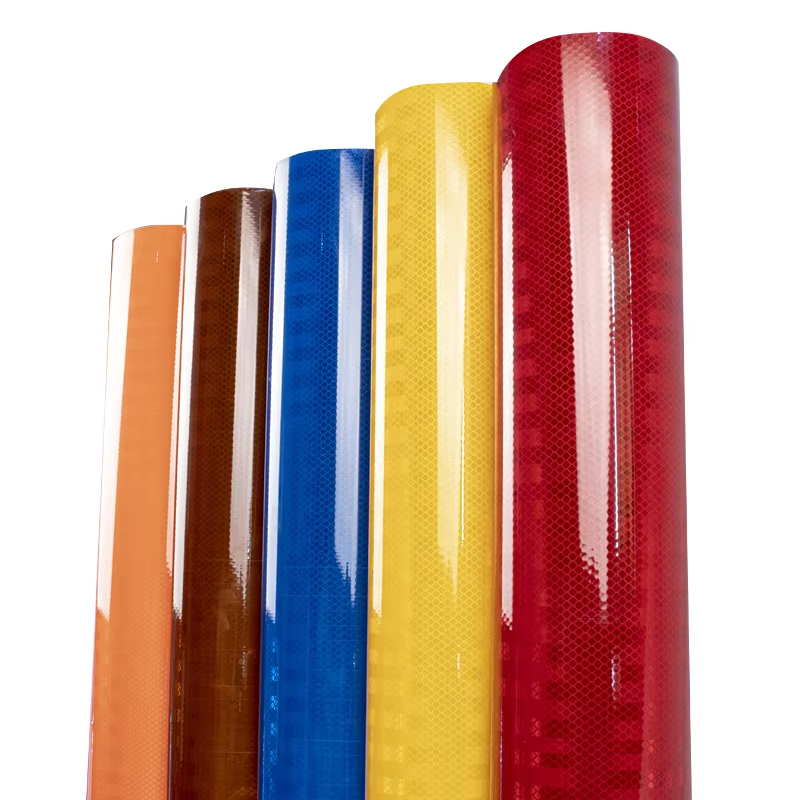
A traffic sign hanging above a motorway or standing at a city intersection performs a task that no other road furniture replicates: it communicates critical information in fractions of a second, at night, in rain, and at highway speeds. When the reflective surface on that sign degrades — when white turns to pale gray and red fades to pink — the sign becomes a liability. The question of where to source signs that stay legible and retroreflective across years of sun, salt, and road spray is not about finding a supplier. It is about understanding the materials, standards, and manufacturing disciplines that separate a sign that lasts a decade from one that fails before its second winter.
The Hidden Cost of Choosing the Wrong Signage Supplier
When a Sign Fails — What Is Actually at Stake
A sign that cannot be read at night from 300 meters does not simply inconvenience a driver. It removes a decision window. At 100 kilometers per hour, a driver covers that distance in under 11 seconds. If the sign becomes readable only at 150 meters because the reflective sheeting has degraded, the time available to read, process, and react shrinks to barely five seconds. Nighttime crash data consistently shows that intersections and exit ramps with poorly maintained or substandard signage record disproportionately high single-vehicle accidents. For municipal procurement departments and highway authorities, the liability extends beyond road safety. A jurisdiction that installed non-compliant traffic sign materials may face legal exposure when accident investigations trace contributory factors to inadequate signage. The cost of replacing signs early — because the original product failed to meet its rated service life — compounds the financial damage with labor, traffic management, and disposal expenses that frequently exceed the original material cost.
Why "Cheap" Reflective Sheeting Becomes Expensive Within 18 Months
The degradation pattern follows a predictable arc. In the first six to twelve months, a low-grade reflective sheeting may look acceptable under daylight. But the retroreflective brightness — the property measured in candelas per lux per square meter that determines nighttime visibility — begins a steep decline almost immediately. Ultraviolet radiation breaks down the polymer matrix that encapsulates the glass beads or microprisms. Moisture infiltrates microscopic cracks at the sheeting edge or around rivet holes, oxidizing the aluminum substrate from the perimeter inward. Within 18 to 24 months in tropical or coastal climates, the sheeting can lose over 50 percent of its original retroreflectivity, and the sign face shows visible delamination at the edges. The economic arithmetic is brutal. A sign that costs 30 percent less at purchase but requires replacement after three years instead of ten years delivers a total cost of ownership roughly 2.5 times higher over a decade, once labor, logistics, and road closure costs are factored in.
What Makes a Sign Truly Reliable — The Material Science Behind Retroreflectivity
Glass Bead vs. Microprismatic Technology — How Each Works at the Optical Level
A reflective traffic sign works by returning a concentrated cone of light toward its source rather than scattering it diffusely. Two fundamentally different optical systems achieve this.
Enclosed-lens glass bead sheeting — historically known as engineer grade or high-intensity grade — embeds thousands of microscopic glass spheres in a transparent resin layer. Light from a vehicle headlamp enters each sphere, refracts at the front surface, reflects off a metallized coating on the back hemisphere of the bead, and refracts again as it exits, returning toward the source. The efficiency of this system is limited by two factors: only a fraction of the bead's back surface can be coated without blocking light entry, and the spherical geometry inherently spreads the returned light into a relatively wide cone. This produces moderate brightness at short to medium distances but falls off quickly at longer observation angles.
Microprismatic sheeting replaces glass spheres with an array of precision-molded cube-corner prisms — tiny triangular pyramids where three mutually perpendicular faces form an internal corner. Light entering the front face of the prism reflects off all three internal faces in sequence and exits parallel to its entry path. Because this is a geometric rather than a refractive mechanism, the return beam is far tighter and brighter. A Type XI microprismatic sign can deliver more than ten times the retroreflective intensity of a Type I glass-bead sign at the same observation geometry. The trade-off is manufacturing complexity: the prism array must be replicated from an electroformed mold with sub-micron precision, and even slight deviations in face flatness or corner angle scatter the returned light.
Understanding ASTM D4956 — The Sheeting Grade That Determines Sign Performance
ASTM D4956, the Standard Specification for Retroreflective Sheeting for Traffic Control, is the primary reference document used by North American procurement agencies and widely recognized in international markets. It classifies sheeting into numbered types based on minimum retroreflectivity coefficients at specified observation and entrance angles, along with color, durability, and adhesion requirements.
Type I, commonly called engineer grade, uses enclosed glass beads and is suitable for low-speed, low-traffic environments — parking lots, private roads, and temporary signage. Type III and Type IV, known as high-intensity and high-intensity prismatic respectively, represent a significant step up in brightness and are specified for most arterial and collector roads. Type VIII and Type XI are the highest-performing microprismatic materials, designed for high-speed freeways, overhead guide signs, and urban intersections where longer recognition distances are safety-critical.
A specification that only lists "ASTM D4956 Type IV" without naming the manufacturer, product series, and independent test report number is incomplete. Retroreflectivity varies considerably between manufacturers even within the same ASTM type classification, and procurement documents that fail to pin down these specifics leave room for substitution with materials that barely meet the minimum photometric thresholds.
The Sign Is More Than the Sheeting — Substrate, Ink, Lamination, and Assembly
The reflective film accounts for the optical performance, but the sign's structural integrity depends on everything beneath and around it. Aluminum is the standard substrate for permanent signage: alloys such as 1050, 1060, and 3003 offer the right balance of corrosion resistance, formability, and cost. Thickness typically ranges from 1.5 mm for small street-name signs to 3.0 mm for large overhead panels subjected to wind load. Signs installed within 50 kilometers of a coastline benefit from anodized or chromate-conversion-coated aluminum to resist salt-spray corrosion.
Screen-printing inks must match the color coordinates specified in the relevant national standard — typically derived from the CIE 1931 chromaticity diagram — and maintain those coordinates across the sheeting's rated outdoor exposure life. UV-cured inks offer better weather resistance than solvent-based alternatives but require precise curing control to achieve full adhesion to the sheeting surface. The edge sealing of a finished sign matters more than it appears. An unsealed or poorly trimmed edge provides a capillary path for moisture to reach the aluminum core, initiating corrosion that creeps under the sheeting and causes peeling that starts at the perimeter and advances inward.
Real-World Case — How a Southeast Asian Highway Authority Reduced Sign Replacement by 40%
Case Background and Operational Pain Points
A national highway authority in a Southeast Asian country managed approximately 3,200 kilometers of expressway and arterial road signage. The authority's standard specification had historically called for ASTM Type I glass-bead sheeting on aluminum substrates for guide signs, with a projected service life of seven years. Field audits conducted after 24 months of installation revealed that retroreflectivity on overhead directional signs had dropped below 50 percent of the initial value on more than 60 percent of inspected units. Signs facing west — receiving full afternoon sun — showed the most severe degradation, with cyan and yellow pigments fading to near-white and edge delamination affecting roughly one in five panels. The annual sign replacement rate had climbed to approximately 18 percent of the total installed base, consuming an increasing share of the authority's maintenance budget.
Root Cause Analysis and Material Upgrade Decision
An engineering review identified three compounding degradation factors specific to the region's climate. Equatorial UV index values averaged 10 to 12 throughout the year — roughly double the exposure intensity used in standard accelerated weathering tests calibrated for temperate climates. Relative humidity consistently exceeded 80 percent, accelerating hydrolysis of the polyurethane topcoat on the glass-bead sheeting. Coastal salt spray, carried inland by prevailing winds, corroded the aluminum edges where edge sealant had been applied inconsistently during fabrication.
The authority revised its material specification for all new installations and scheduled replacements. Overhead guide signs on expressways were re-specified from Type I to Type XI microprismatic sheeting with a documented UV-stabilized polyurethane topcoat. Aluminum substrates were upgraded to 3003 alloy with a chromate conversion coating, and the fabrication specification added a mandatory hot-laminated edge sealing process with a minimum 3 mm encapsulation overlap. Installation crews were retrained on substrate surface preparation, including a degreasing and etching step applied within two hours of sheeting application.
Measurable Outcomes
A follow-up audit conducted three years after the specification change examined 450 signs installed under the new standard. Retroreflectivity retention across all color classes averaged 89 percent of initial values, compared to 47 percent in the pre-upgrade cohort at the same age. Edge delamination was observed on fewer than 2 percent of panels. The annual sign replacement rate dropped from 18 percent to under 11 percent. The total cost of the specification upgrade — including higher material costs per square meter and additional fabrication steps — broke even against reduced replacement expenditure within 28 months. Beyond the financial numbers, the authority recorded a measurable decline in nighttime navigation-related incidents on upgraded highway segments, reinforcing the safety case for the material investment.
How to Evaluate and Select a Signage Manufacturer
Certification Checklist — What Documentation Separates a Serious Supplier
A credible traffic sign manufacturer provides documentation before providing a quotation. The core documents include an independent laboratory test report demonstrating compliance with ASTM D4956 for the specific sheeting type proposed — not a generic certificate for a different product in the manufacturer's catalog. The report should be dated within the last 24 months and issued by an ISO/IEC 17025-accredited testing laboratory. ISO 9001 certification for the manufacturing facility establishes that quality management processes exist, though it does not itself verify product performance.
For international procurement, additional certifications carry weight in specific markets. EN 12899 is the European standard for fixed vertical road traffic signs, covering both structural and photometric requirements. ECE Regulation 104 applies to retroreflective markings for vehicles and is relevant when the same sheeting material is specified for both signage and vehicle conspicuity applications. For Southeast Asian, Australian, and Middle Eastern markets, AS/NZS 1906.1 compliance is often specified in tender documents. The presence of multiple certifications from recognized bodies signals a manufacturer whose products have been independently validated across different regulatory frameworks — reducing the procurement risk of single-market compliance testing.
Factory Audit Points — What to Look for Beyond the Showroom
Auditing a reflective sheeting production line rewards attention to three process stages. First, mold fabrication: for microprismatic sheeting, the master mold — typically produced by diamond turning or electroforming — determines the prism geometry that governs optical performance. A factory that owns this process in-house rather than purchasing pre-made molds from a third party has direct control over the most critical quality variable. Second, the coating and lamination line: the application of the reflective layer, the UV-stabilized topcoat, the pressure-sensitive adhesive, and the release liner must occur in a cleanroom or controlled-environment zone. Dust particles trapped between layers create optical defects that scatter light and reduce retroreflectivity. Third, the quality assurance station: a production line should include inline retroreflectivity measurement at multiple angles, color spectrophotometry, and adhesion peel testing on samples drawn from each production batch. Ask to see the batch test records — not just the type-approval certificate — for the last three production runs. Consistency across those records is a better predictor of field performance than any single laboratory report.
Practical Procurement and Maintenance Guidance
Specification Writing — How to Define Requirements That Suppliers Cannot Cut Corners On
A procurement specification that is too brief invites substitution. The effective approach names the specific sheeting product and manufacturer, the ASTM type and minimum coefficient of retroreflection (RA) values at the relevant observation angles, the aluminum alloy and thickness, the ink system and curing method, and the edge sealing process. Include a requirement for batch-level test certificates with each shipment. Specify that the procuring agency reserves the right to conduct independent third-party testing on randomly selected samples from delivered lots, with non-compliance triggering rejection and replacement at the supplier's expense. These clauses, written plainly and without ambiguity, shift the quality verification burden from the buyer's receiving dock to the manufacturer's production floor.
Installation and Lifecycle Maintenance Recommendations
Even the best reflective traffic sign underperforms if installed incorrectly. The aluminum substrate must be cleaned with a degreasing solvent, lightly etched or abraded, and dried before sheeting application. Application should proceed in a dust-controlled environment at temperatures between 18 and 30 degrees Celsius; cold application below 10 degrees Celsius inhibits adhesive wet-out and leads to premature edge lifting. After application, a 24-hour curing period at ambient temperature allows the pressure-sensitive adhesive to develop full bond strength before the sign is exposed to wind load or rain.
Post-installation, a structured inspection program preserves the investment. Portable retroreflectometers allow field measurement of sign brightness without removing the sign from service. Signs on high-speed roadways should be inspected annually; signs on lower-traffic roads can follow an 18-to-24-month cycle. Any sign with retroreflectivity below 70 percent of the specified minimum for its ASTM type should be scheduled for replacement in the next maintenance cycle. Cleaning — plain water and a soft brush, no solvents — restores some lost brightness by removing road film and dust, but it does not reverse UV-induced polymer degradation. For signs in storage, maintain ambient temperatures below 35 degrees Celsius, keep relative humidity under 60 percent, and store panels vertically with protective interleaving to prevent surface abrasion.
Frequently Asked Questions
What is the difference between engineer grade and diamond grade reflective sheeting?
Engineer grade (ASTM Type I) uses enclosed glass beads and provides moderate retroreflectivity suitable for low-speed roads and parking areas. Diamond grade (ASTM Type XI) uses microprismatic cube-corner technology to return a far brighter, more tightly focused beam. At the same distance and headlamp angle, a diamond grade sign can appear up to ten times brighter, enabling longer reading distances at highway speeds.
How can a buyer verify that a traffic sign meets ASTM D4956 requirements?
Request an independent test report from an ISO/IEC 17025-accredited laboratory, dated within the last 24 months, showing retroreflectivity coefficients at all required observation and entrance angles for the specific sheeting product. Cross-check the product name and batch number on the report against the shipment documentation. Conduct random-sample third-party testing on delivered lots.
Why do some reflective signs fade within two years?
Rapid fading usually results from a combination of inadequate UV stabilizers in the sheeting topcoat, use of solvent-based screen-printing inks with poor weather resistance, and exposure to tropical-level ultraviolet radiation that exceeds the material's design limits. Signs facing west or installed in coastal and high-altitude environments degrade fastest.
What substrate material is best for outdoor signage?
Aluminum alloy 3003 or 1050 in thicknesses from 1.5 mm to 3.0 mm is the standard for permanent outdoor signage. The aluminum should receive a chromate conversion coating or anodizing treatment for corrosion resistance. For coastal installations, specifying 3003 alloy with a minimum 2.0 mm thickness and full edge sealing provides the best longevity.
How often should signage be inspected for reflective performance?
Annual inspection with a portable retroreflectometer is recommended for signs on high-speed roads and expressways. Signs on lower-volume roads can follow an 18-to-24-month schedule. Any sign measuring below 70 percent of the ASTM-specified minimum retroreflectivity for its sheeting type should be scheduled for replacement.
Can reflective sheeting be applied to existing sign blanks in the field?
Field application is technically possible but rarely recommended for permanent signage. Achieving proper adhesion requires a clean, dry, and properly prepared surface — conditions that are difficult to control outdoors. Factory-applied sheeting under controlled environmental conditions consistently produces longer service life and better optical performance.
What is the typical service life of a high-quality reflective traffic sign?
A well-manufactured sign using Type XI microprismatic sheeting on a properly treated aluminum substrate, installed in a temperate climate with standard maintenance, typically delivers 10 to 12 years of service before retroreflectivity drops below actionable thresholds. Signs in tropical or high-UV environments may reach replacement triggers at 7 to 9 years.
Which certifications matter most when sourcing signage internationally?
ASTM D4956 compliance verified by independent lab testing is the global benchmark for reflective sheeting performance. ISO 9001 confirms manufacturing quality management. Market-specific certifications — EN 12899 for Europe, ECE 104R for vehicle applications, AS/NZS 1906.1 for Australia and New Zealand — are essential for regulatory acceptance in those regions. Few manufacturers hold all of them simultaneously.
Choosing a Reliable Reflective Materials Partner
The difference between a sign manufacturer and a reflective materials partner comes down to depth of engineering control. Most sign fabricators purchase reflective sheeting from third-party suppliers. A smaller number manufacture the sheeting itself. Fewer still produce the microprismatic molds, the sheeting, and the finished signs under one quality management system — a distinction that directly affects batch-to-batch consistency, lead times, and the ability to customize optical performance for specific application requirements.
Sanhao operates at that integrated level. Over 25 years of specialized experience in reflective materials is backed by a manufacturing footprint that runs from mold fabrication through microprismatic sheeting production to finished sign assembly — a capability shared by only two factories in China. This vertical integration means that the optical geometry of the prism array, the UV stabilization of the polymer topcoat, and the adhesion performance of the pressure-sensitive layer are engineered as a single system rather than compromised across multiple suppliers' specifications.
The company's certification portfolio spans the standards that procurement officers in North America, Europe, and Asia-Pacific markets look for: ASTM D4956, EN 12899, ECE 104R, AS/NZS 1906.1, and ISO 9001. For buyers evaluating reflective traffic sign suppliers, the practical test is straightforward. Ask to see the mold fabrication facility. Request batch-level retroreflectivity test records from recent production. Verify that the same quality system governs both the raw sheeting and the finished sign. Sanhao answers those requests with production-floor transparency and documented quality consistency — because a sign that cannot be read at night was never really a sign at all.
Table of Contents
- The Hidden Cost of Choosing the Wrong Signage Supplier
- What Makes a Sign Truly Reliable — The Material Science Behind Retroreflectivity
- Real-World Case — How a Southeast Asian Highway Authority Reduced Sign Replacement by 40%
- How to Evaluate and Select a Signage Manufacturer
- Practical Procurement and Maintenance Guidance
- Choosing a Reliable Reflective Materials Partner