
 EN
EN
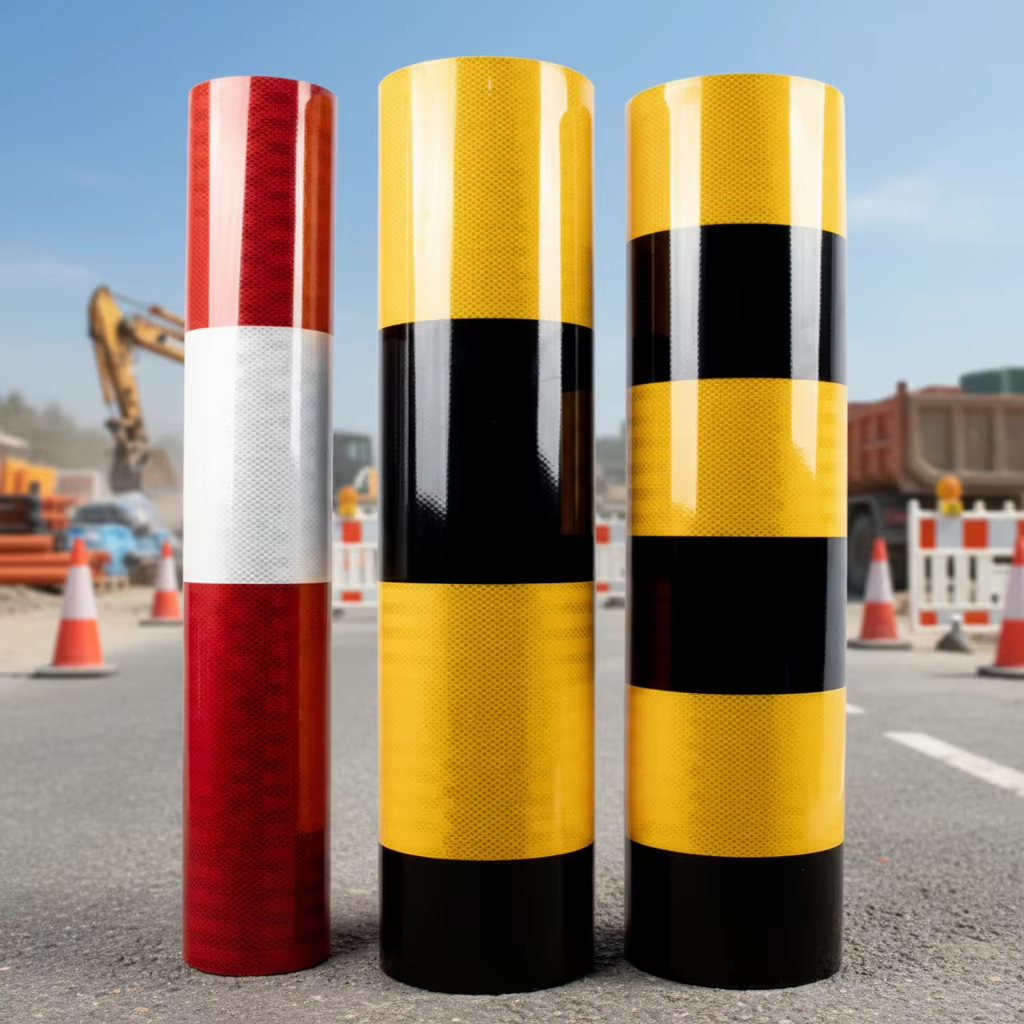
Is Reflective Sheeting Roll Easy to Cut and Process?
A reflective roll arriving at a sign shop represents both opportunity and a fabrication challenge. The material must be cut cleanly without delamination, edge cracking, or loss of retroreflective performance. The question is not simply whether it can be cut — but whether it can be processed efficiently while preserving optical integrity.
Understanding the Material Structure Behind Cutting Behavior
How Multi-Layer Construction Affects Cutting Response
A reflective roll is not a single homogeneous sheet. Most highway-grade products feature a protective PMMA acrylic top layer, a micro-prismatic or glass bead retroreflective core, an adhesive layer, and a release liner. Each layer responds differently to shear force. The PMMA surface layer, with its high optical clarity and UV resistance, can micro-fracture under excessive cutting pressure if blade depth is not calibrated correctly. The adhesive layer, typically a pressure-sensitive acrylic formulation, can gum up cutting blades when shop temperatures exceed 25°C.
Understanding these layers explains why a reflective roll requires specific blade types. Carbide-tipped drag blades between 45° and 60° produce clean edges on prismatic sheeting without tearing the retroreflective elements. Rounded or dull blades create burred edges that scatter light and reduce the coefficient of retroreflection by up to 15% along cut lines.
Prismatic vs. Glass Bead: Why Composition Determines Processing Strategy
Micro-prismatic reflective roll material, built with cube-corner elements molded into PMMA, tolerates plotter cutting well when blade pressure stays between 80 and 120 grams. The rigid prism geometry resists crushing under controlled force. Enclosed-lens glass bead sheeting, however, compresses more easily — glass spheres embedded in a flexible binder layer can shift or crush if blade pressure exceeds 60 grams.
The key distinction: prismatic sheeting rewards precision tooling with sharp, light-efficient edges; glass bead sheeting demands lighter touch to preserve the spherical reflector array. A sign shop processing both types should maintain separate blade sets and pressure profiles for each material grade.
Processing Methods for Professional Results
Plotter Cutting vs. Die Cutting for Precision Sign Fabrication
Computer-driven plotter cutting handles reflective roll material with repeatable accuracy down to 0.1 mm. For standard traffic sign lettering and geometric shapes, a drag-knife plotter operating at 200–400 mm/s delivers clean cuts without heat buildup. Die cutting, by contrast, suits high-volume production runs where identical shapes repeat across hundreds of sheets. Steel-rule dies paired with hydraulic or clicker presses punch through the complete material stack in one stroke.
Die cutting offers speed advantages — a single press cycle completes a full sheet in under three seconds — but requires upfront tooling investment. Plotter cutting provides flexibility for variable data jobs and short runs without die costs. Most professional sign fabricators maintain both capabilities: plotters for custom orders and die cutting for DOT-standard sign blanks.
Why Temperature Control Matters During Sheet Processing
Shop floor temperature directly affects reflective roll processability. Below 15°C, PMMA layers stiffen and become prone to edge chipping during cutting. Above 30°C, the pressure-sensitive adhesive softens, causing liner separation issues and blade gumming. The optimal processing window sits between 20°C and 25°C. Temperature-controlled fabrication areas, common in facilities producing ASTM D4956-compliant signs, ensure consistent cut quality batch after batch.
A regional traffic sign contractor in Southeast Asia processing 3HAO reflective rolls discovered that moving cutting operations to an air-conditioned enclosure eliminated a recurring edge-delamination problem. The facility previously operated at ambient 32°C, causing adhesive bleed that compromised 8% of cut sheets. After climate control, reject rates dropped below 1%.
Real-World Processing Efficiency Gains
A municipal signage workshop in Brazil processing 600 square meters of reflective roll material monthly switched from manual cutting templates to CNC plotter cutting. Manual methods required 45 minutes per sheet for complex warning sign layouts with multiple color zones. The plotter completed the same nested layout in 12 minutes with zero material waste from misaligned cuts. Monthly throughput doubled without adding labor.
Material utilization also improved. Nesting software arranged cut patterns to maximize sheet usage, pushing yield from 78% to 93%. Over a 12-month period, the workshop saved approximately 1,100 square meters of reflective roll material — equivalent to roughly two full rolls.
Frequently Asked Questions
What blade type works best for cutting reflective roll material?
A 45° to 60° carbide-tipped drag blade produces the cleanest edges on prismatic reflective sheeting. For glass bead materials, a 60° blade at reduced pressure prevents bead crushing. Suppliers like Fujian 3HAO Technology recommend testing blade settings on scrap material before production runs.
Can reflective roll be cut with scissors or a utility knife?
Yes, for small jobs and field adjustments. A sharp utility knife with a fresh blade, guided by a straightedge, works for manual cutting. Scissors can handle thin engineer-grade sheeting but may cause edge distortion on thicker prismatic materials.
Does cutting affect retroreflective brightness near edges?
Properly cut edges on prismatic sheeting show negligible brightness loss within 1–2 mm of the cut line. Poor blade condition or excessive pressure can cause micro-cracking extending 5–8 mm into the reflective zone, reducing retroreflectivity in that band.
What is the minimum font size achievable with plotter-cut reflective sheeting?
Standard drag-knife plotters reliably produce 10 mm tall characters on prismatic reflective roll material. Below 12 mm, "islands" inside enclosed characters like "A" or "B" may lift during weeding.
How should multi-layer cut waste be managed?
Reflective roll scrap contains PMMA, adhesive residue, and silicone-coated release liner. Local recycling regulations vary — some facilities separate the liner for dedicated recycling streams while sheeting offcuts go to industrial waste.
Can reflective roll be laser cut?
Not recommended. PMMA can be laser cut, but the adhesive layer releases fumes, and the retroreflective micro-prism structure melts at laser temperatures, destroying optical performance along the entire heat-affected zone.