
 EN
EN
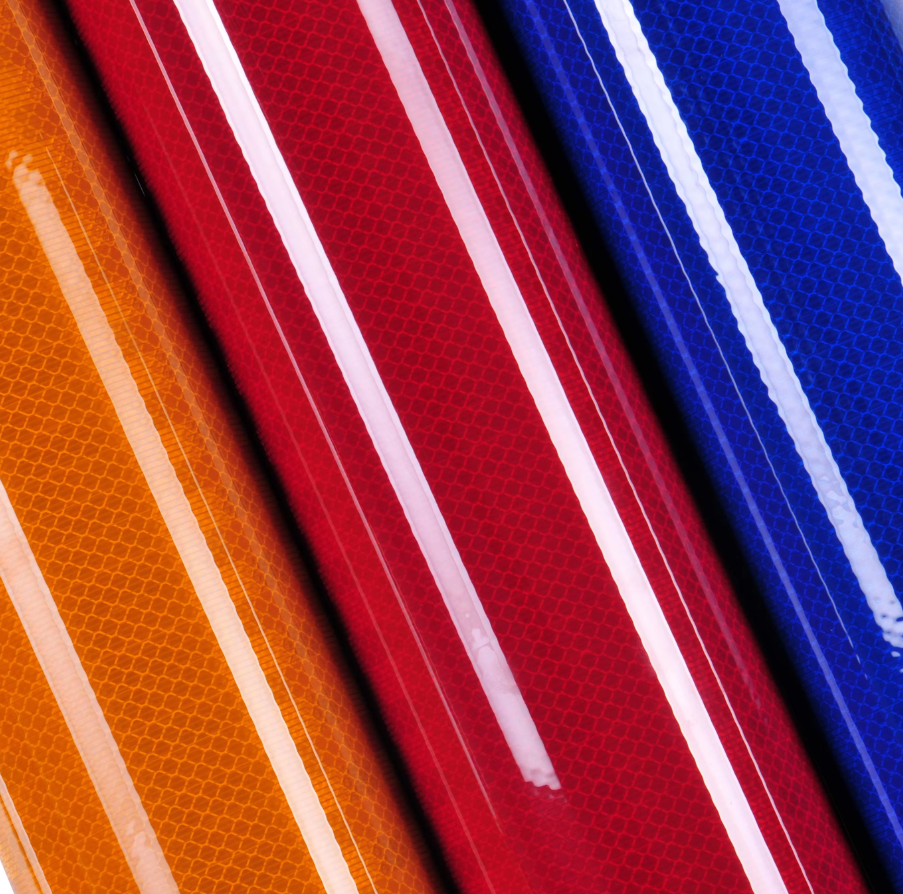
ASTM D4956 Servers Sheet Performance Tiers
Type I to Type IX: Reflective Material Type to Fit Application
ASTM D4956 distinguishes reflective sheetings in nine tiers to describe their different levels of visibility, durability, and performance in various environments. Type I, which is mostly glass-bead sheeting, is designed to fit low-retroreflectivity demand environments, such as indoor wayfinding sheeting and parking sign sheeting, which will be used in low-speed and/or low-distance applications. Types III and IV, with their mid-tier allotment vertical to type I, achieve brighter sheeting with up to threefold the excess brightness, making them desirable for use in regulatory sheeting and temporary work zones where sheeting is to be viewed at a distance and/or where the angle of the sheeting will be variable. Type IX is at the other end of the spectrum, where the design of the microprprisms is dense and optimized for maximum retention of brightness, and exist in extreme environments, such as high-speed, high-risk applications. When used, this type would be for highway guide signs and possibly emergency response sheeting. Studies show a decrease in high-risk nighttime collisions of type I to type IX sheeting by as much as 40%.
Brightness (cd/lx/m²) and viewing angle: Why both factors lead to quantifiable reflectivity.
Effective nighttime visibility relies on both brightness —measured in candelas per lux per square meter (cd/lx/m²) — and performance at an angle. A material with a high cd/lx/m² rating might appear bright when viewed directly, but in most cases, such materials would fail when viewed at an angle. True field performance is achieved when reflectivity is maintained at observation angles between 0.2° to 0.5° — the primary distinction between economy sheeting and safety-critical materials like Type IX. Field studies have proven that materials designed for performance at wide angles improve driver reaction times by an average of 1.3 seconds compared to materials designed for narrow angles. This is the primary reason that both the brightness and angular tolerance of materials are included in the requirements of standards — such as for pedestrian apparel — that specify a minimum brightness of 50 cd/lx/m².
MUTCD (Manual of Uniform Traffic Control Devices) compliance is a minimum requirement for materials.
Minimum Reflectivity Levels by Application: Signs, Work Zones, and Pedestrian Apparel
To help guarantee nighttime conspicuity, the Manual of Uniform Traffic Control Devices (MUTCD) specifies minimum retroreflectivity levels. It is set at 50–380 cd/lx/m² for road signs, at 250 cd/lx/m² for work zone barriers on high-speed roads, and at 125 cd/lx/m² for high-visibility pedestrian vests. These minimums are a starting point; as has been evidenced from laboratory conditions, the minimal levels demonstrate performance. They do not account for reflectivity losses due to weathering, abrasion, cleaning, or UV degradation.
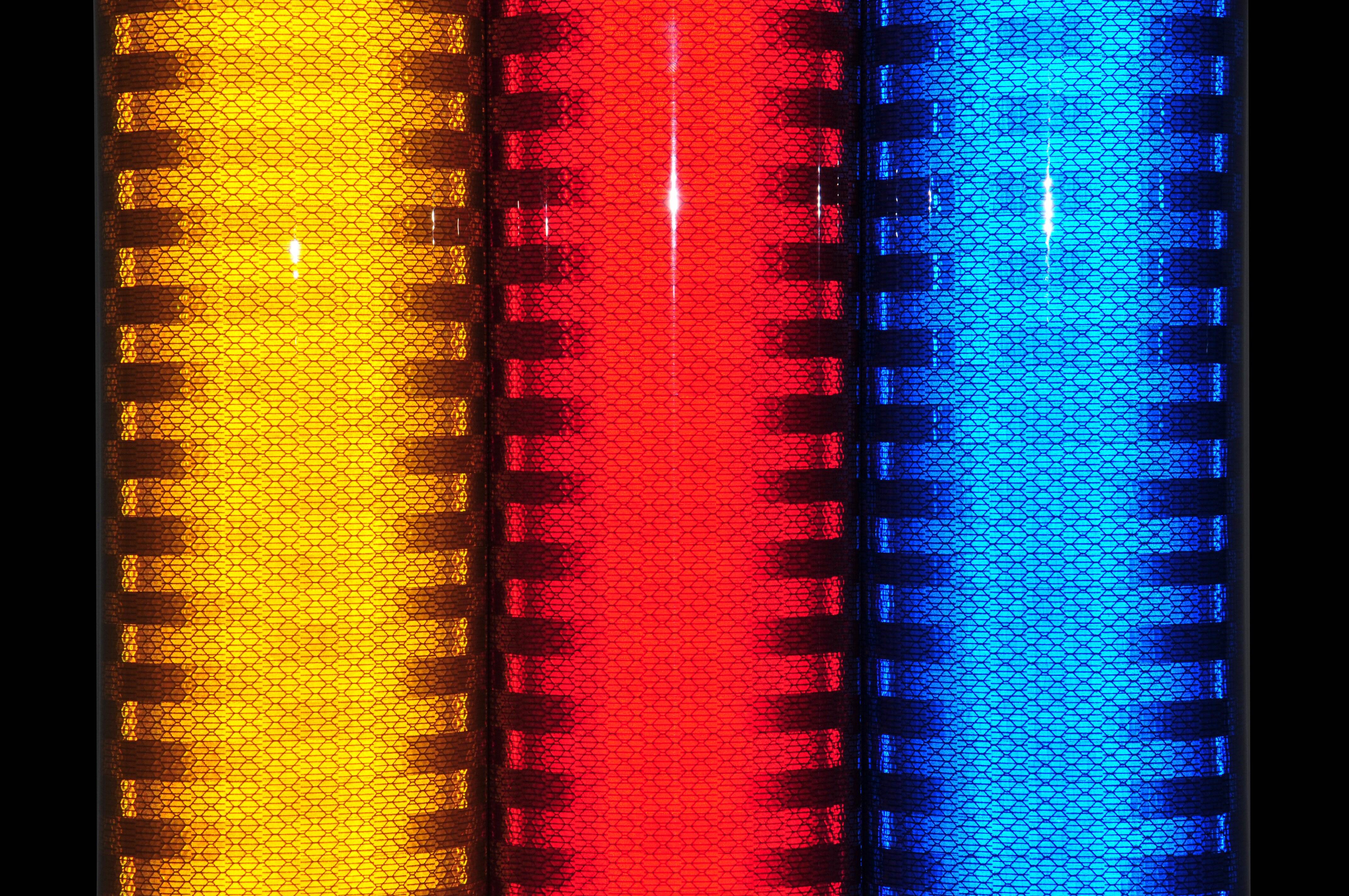
Beyond Compliance: Why Meeting MUTCD Doesn’t Equal Long-Term Reflective Performance
The MUTCD minimally scores performance at the time. Reflective materials will not retain that performance level in the future. Because real world elements compromise reflective capacities in different ways. For example: UV radiation can yellow/add brittleness to the binder and substrate, and remove coating and/or adhesive to expose the surface. If a sign has 250 cd/lx/m² for Retroreflective Brightness, it could then become less than 50 cd/lx/m² within 2 years. About 60% of reflective products fail to meet the durability performance level from their original MUTCD tests. To maintain safety, engineering should include UV Stabilizers and other advanced materials, to meet all necessary MUTCD standards.
Key Laboratory Metrics That Predict Real-World Reflective Behavior
RL, RA, QD, and CIExy: Decode Laboratory Measured Reflectivity
Analytical parameters of laboratory measures can translate their reflective performance, if interpreted within a rational framework together. Retroreflective Luminance (RL) is measured in cd/lx/m², and measured reflective intensity is a function of a defined viewing geometry (e.g. 0.2 degree viewing angle, as per AASHTO 2023). Retroreflective Area (RA) measures the surface as a percent of the total exposed reflective material. A measure of less than 90% typically suggests gaps or inconsistencies that restrict peripheral vision. Observation Angle (QD) measures reflective geometries of the light source, material and observer. A “narrow” measure of (0.2° – 0.5°) is indicative of a long and fast moving situation as one would encounter along a highway. A “wide” measure (≥1.0°) is a static and close reflective material such as a work zone or other areas where the material may encounter the pedestrian. As the CIExy coordinates of the color of the reflective material shift, and are outside of ΔE < 1.0, it indicates a color loss, and fading of color may compromise the function of a reflective material.
Metric Purpose Impact on Performance
RL Brightness intensity Low RL = Poor long-distance visibility
RA Effective coverage Low RA = Reduced peripheral recognition
QD Angular performance Short QD = Distance effectiveness; Long QD = Near-field safety
CIExy Color stability High ΔE = Compromised color recognition
These metrics in conjunction predict longevity and reliability in the field. RL retention post 1,000 hours of accelerated UV exposure is one example of a separating line with high-performance materials (>85% retention) on one side, while budget options are on the other (<50% retention). Field validation has demonstrated that QD alignment eliminates “blackout zones” while curve navigation, and that batch congruency in the CIExy metrics has established a standardized form in traffic guidance which is of great importance since 76% of sign-related accidents at night involve the use of traffic control devices (NHTSA 2022).
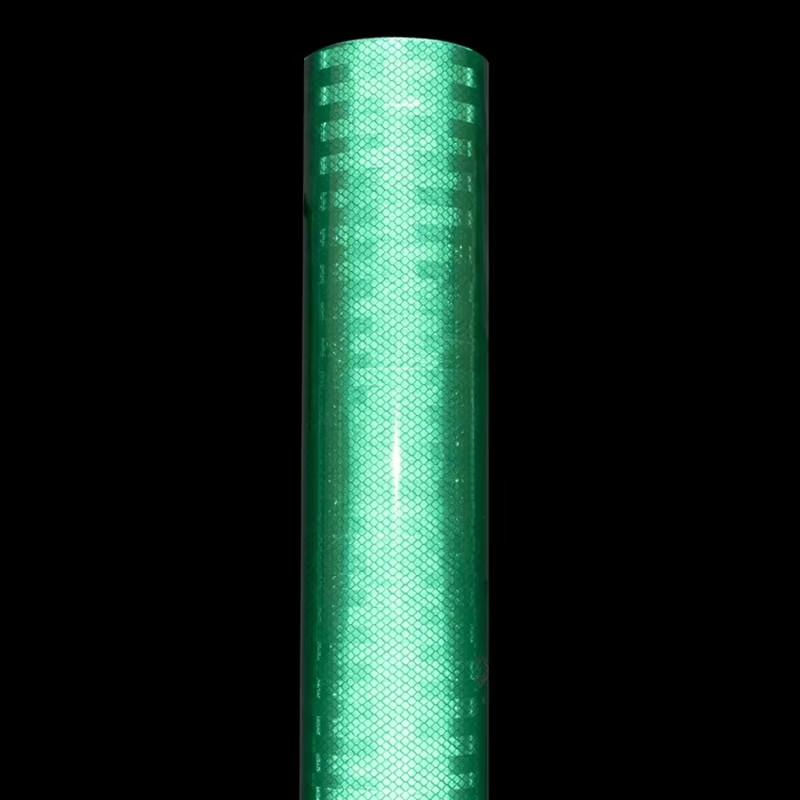
Field-Validated Indicators of Sustained Reflective Performance
UV Stability, Wash Durability, and Abrasion Resistance (also called alarming) are criterions for Reflective Longevity Lab-Brightness Measure.
US and other labs focus on Brightness Measure. Burns and real world Testing enduring organizational stress on materials durability. Abrasion Resistance is called alarming. Burns and US lunar ER are timed. Laundering operations microprismatic structures sustain Burns. Contact with ER sustains contact with materials. Materials sustain Burns in hypothetical environments using >80% UV and reflective persistence for +2000 hours (G155), +50 washes (6330), sustained Burns (ASTM D4060). All of this is called a triad because of the following:
UV Stability is self explanatory.
Wash Durability ensures reflective survival in decontamination.
Abrasion Resistance is self explanatory.
These are Burns in hypothetical, static environments. Reflective materials, shifted. This determines reflective procurement; sustained for protection, public.
FAQ
ASTM D4956 performance tiers?
There are 9 performance tiers in ASTM D4956, classify reflective materials based on visibility rating, durability and environmental suitability, and ECE rating.
Angular performance in reflective materials is critical for safety.
An example of a reflective is important, ensuring the reflective materials maintain visibility. This is critical for preventing accidents.
Does compliance to MUTCD mean that long term reflectivity is guaranteed?
No. They may show that signs meet brightness specifications. But, once they’re exposed to the elements, there’s no guarantee. Superior engineering is needed to maintain reflectivity.
When it comes to reflectivity, what other factors need to be considered?
Factors that will make engineering superior to others, as it pertains to how the materials will be abused structurally when introduced to weather, include UV, wash, and abrasion durability.